Production Background
●What is Toyotama-hime?
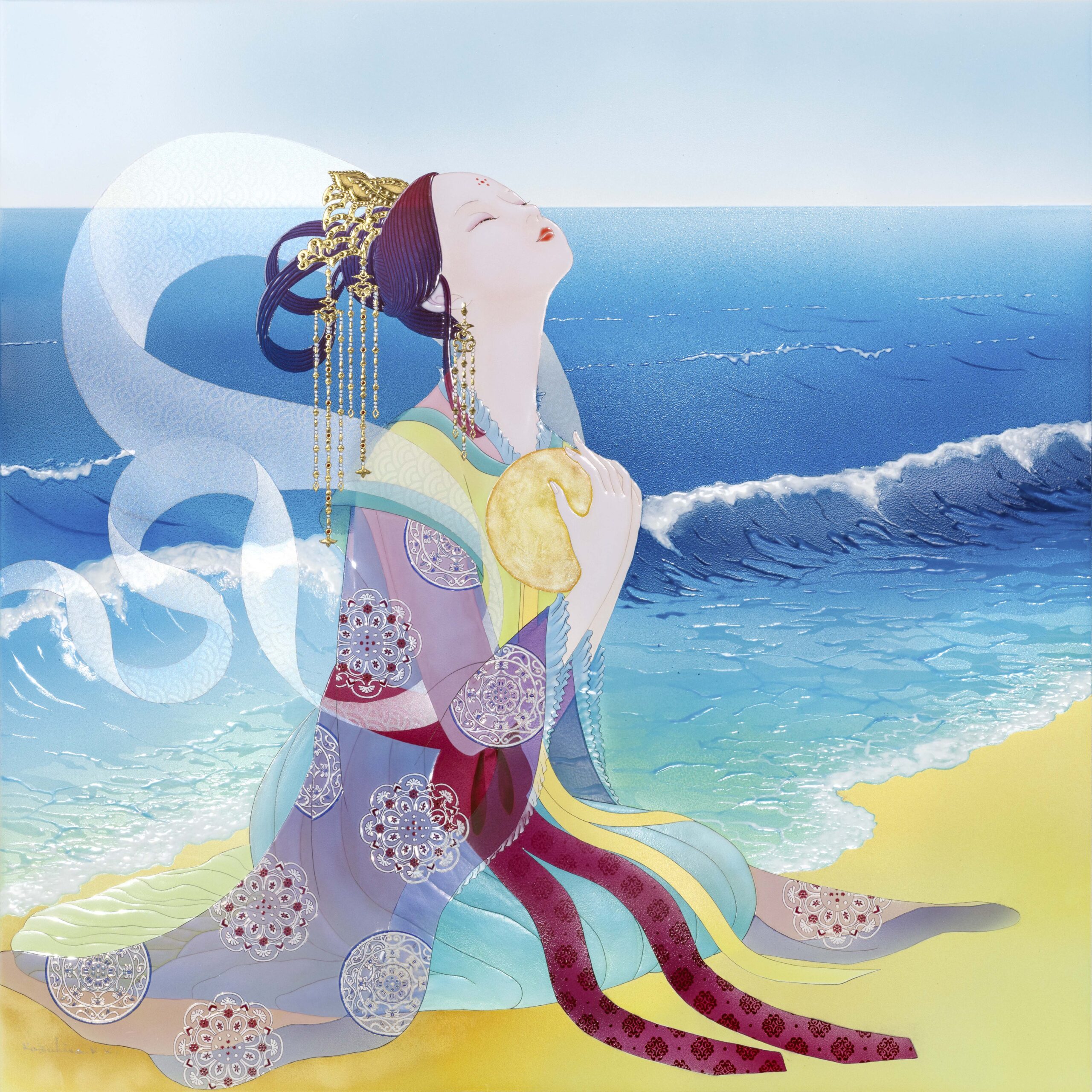
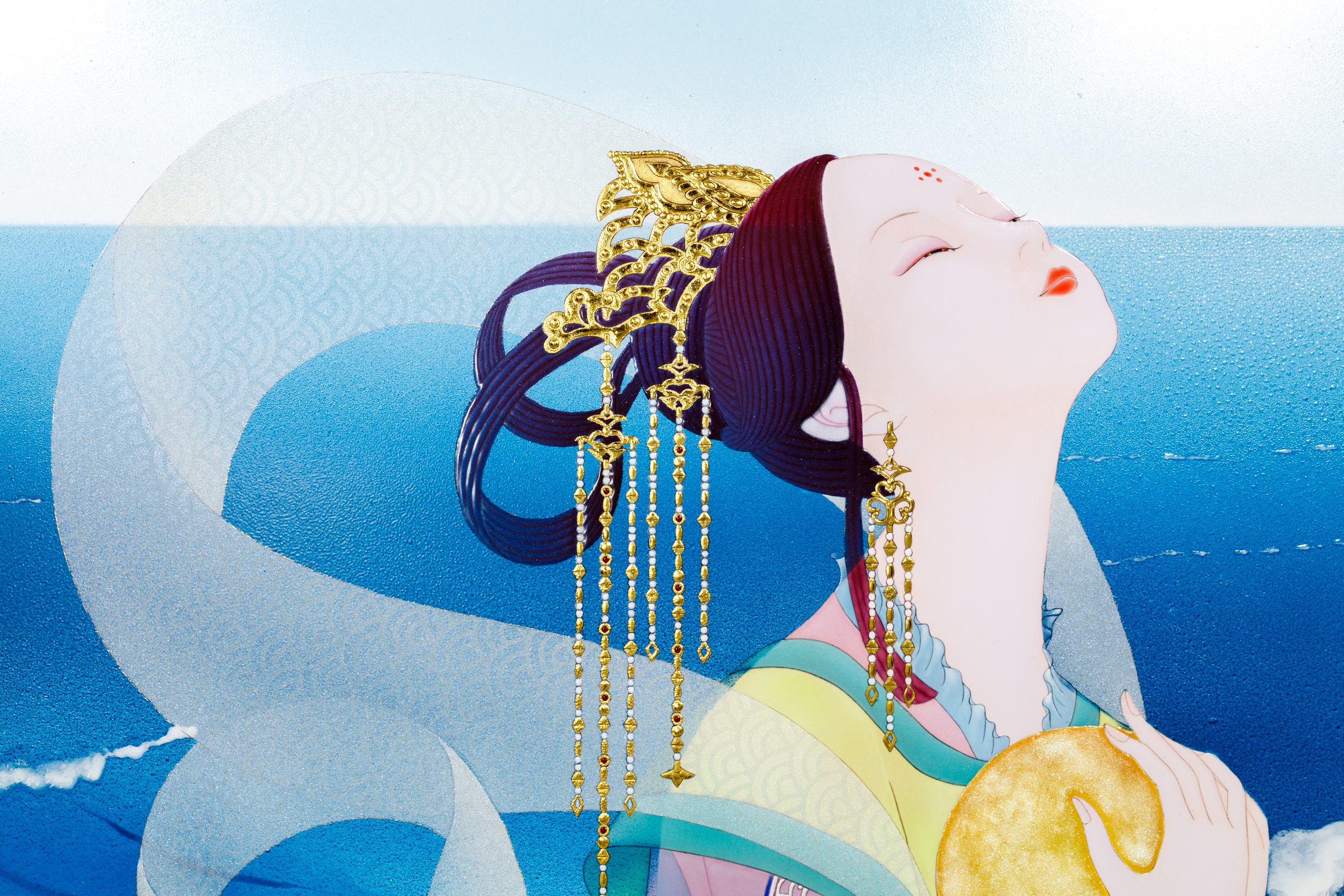
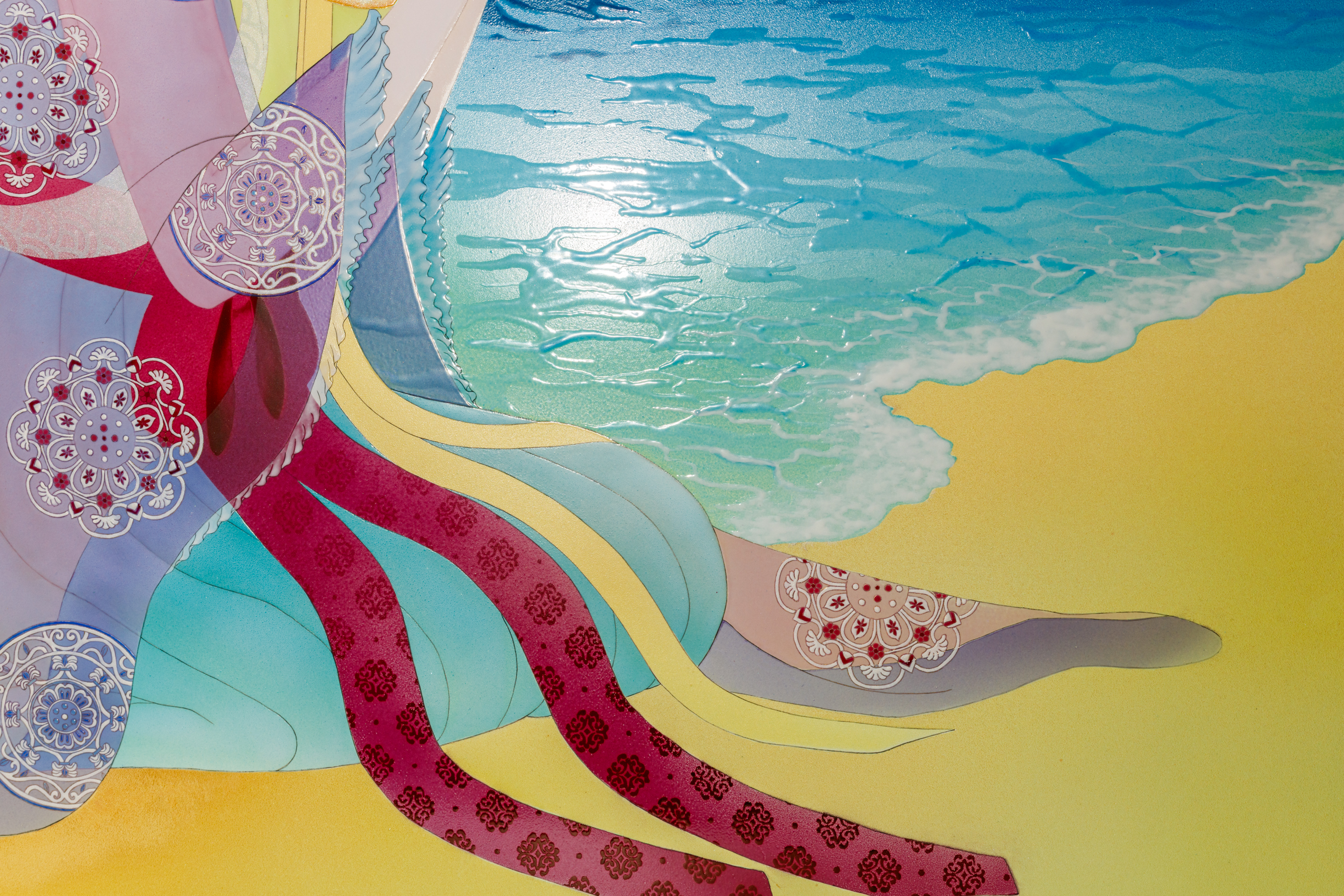
Toyotama-hime, who appears in the Kojiki and Nihon Shoki, is the daughter of the sea god and a goddess deeply involved in the famous myth of Umisachihiko and Yamasachihiko. Do you remember the story of Umisachihiko and Yamasachihiko that you read or heard as a child? The elder brother, Umisachihiko, was good at catching fish in the sea, while the younger brother, Yamasachihiko, was good at catching birds and animals in the mountains. One day, Yamasachihiko suggested they exchange their tools. The elder brother reluctantly lent his fishing hook to his younger brother. However, while Yamasachihiko was fishing, he dropped his precious fishing hook into the sea...
Yamasachihiko, the younger brother, finds his fishing hook and reaches the palace of the gods at the bottom of the sea. There he meets Toyotamahime, the daughter of the sea god, and the two fall in love and get married. When it is time to return to land, Toyotamahime is pregnant. Following her husband to the human world, Toyotamahime makes one promise to her husband when she is about to give birth: "Never look inside the birthing hut." However, Yamasachihiko, overcome by anxiety and curiosity, breaks his promise and peeks inside, only to find his wife in the form of a dragon, suffering as she gives birth to their child. Having had her true form revealed, Toyotamahime declares, "I can no longer stay in the human world," and leaves her newborn child behind, closing the gates to the sea and departing to the bottom of the ocean. The child she gave birth to later becomes the source of the bloodline that leads to Emperor Jimmu, the first emperor of Japan, and Toyotamahime is considered Emperor Jimmu's grandmother.
●Why "Toyotama-hime"?
The myth symbolizes the boundary between two worlds: "the sea = the world of nature and the sacred" and "land = the real world where humans live." Her name, "Tama," means a rich soul and the radiance of life. Her departure, after a promise is broken, as she is filled with the wild and natural energy incomprehensible to humans, seems to tell a story of both the harshness of nature and the nobility of continuing life. The scenario of "being told not to look, being seen, and then disappearing" is a classic motif found not only in Japanese folktales like "The Crane's Return of a Favor" but also in myths around the world. She can only live with humans while she hides her true identity. The moment humans intrude, wanting to "know her true form" and "verify everything with their own eyes," that balance is disrupted, and what is precious disappears. Perhaps the message is that "if we only believe and try to control what we see with our own eyes, we will lose the most important things, such as the blessings of nature and true mystery." Despite the presence of genuine love, the monstrous appearance of the giant shark misled them, causing them to miss the truth.…
There is a word called awe. It is a word that expresses human humility, but now that science has advanced, we tend to assume that there is nothing to fear. Rather, it is said that what we should fear is AI, but there is no "awe" or "reverence" in that.
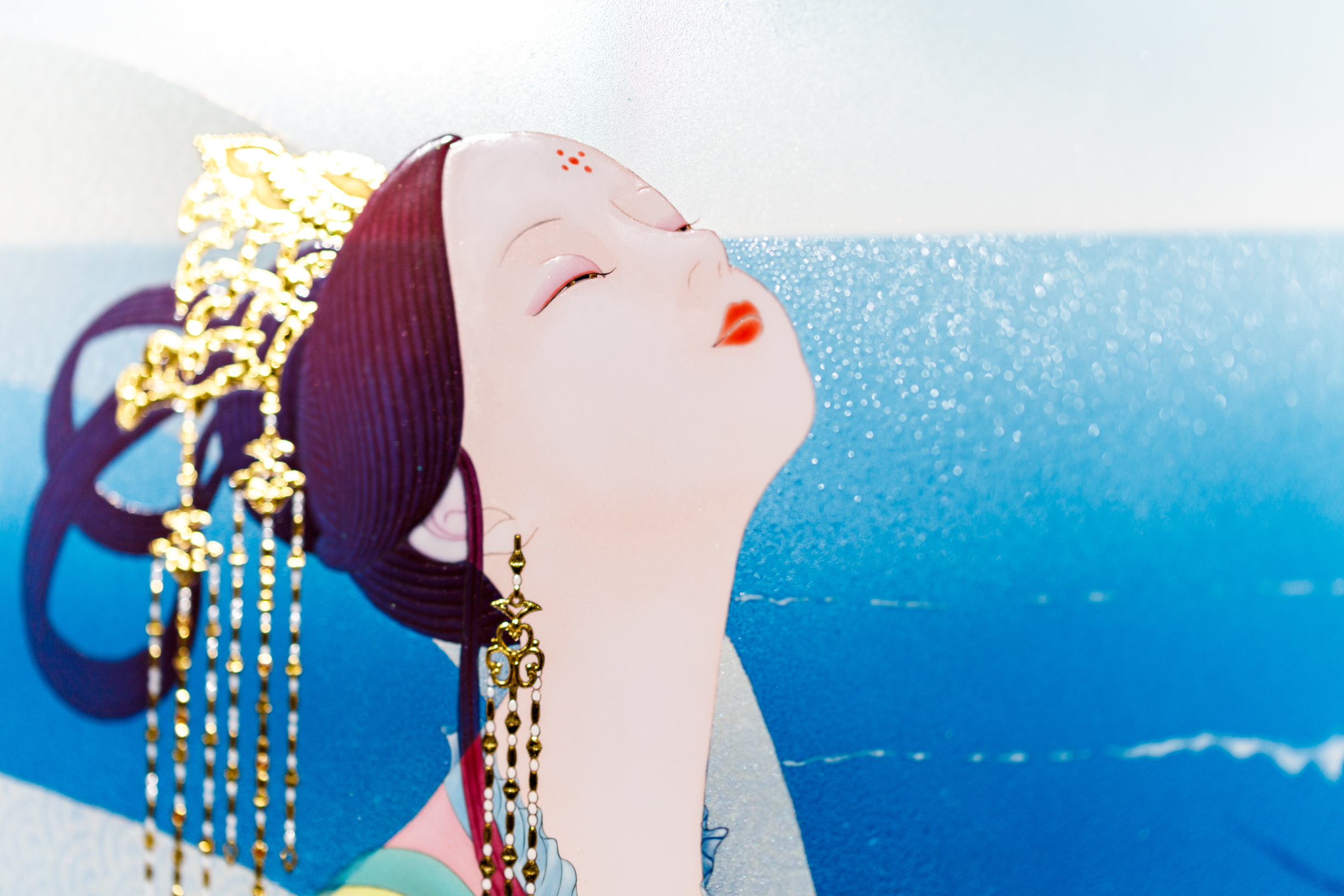
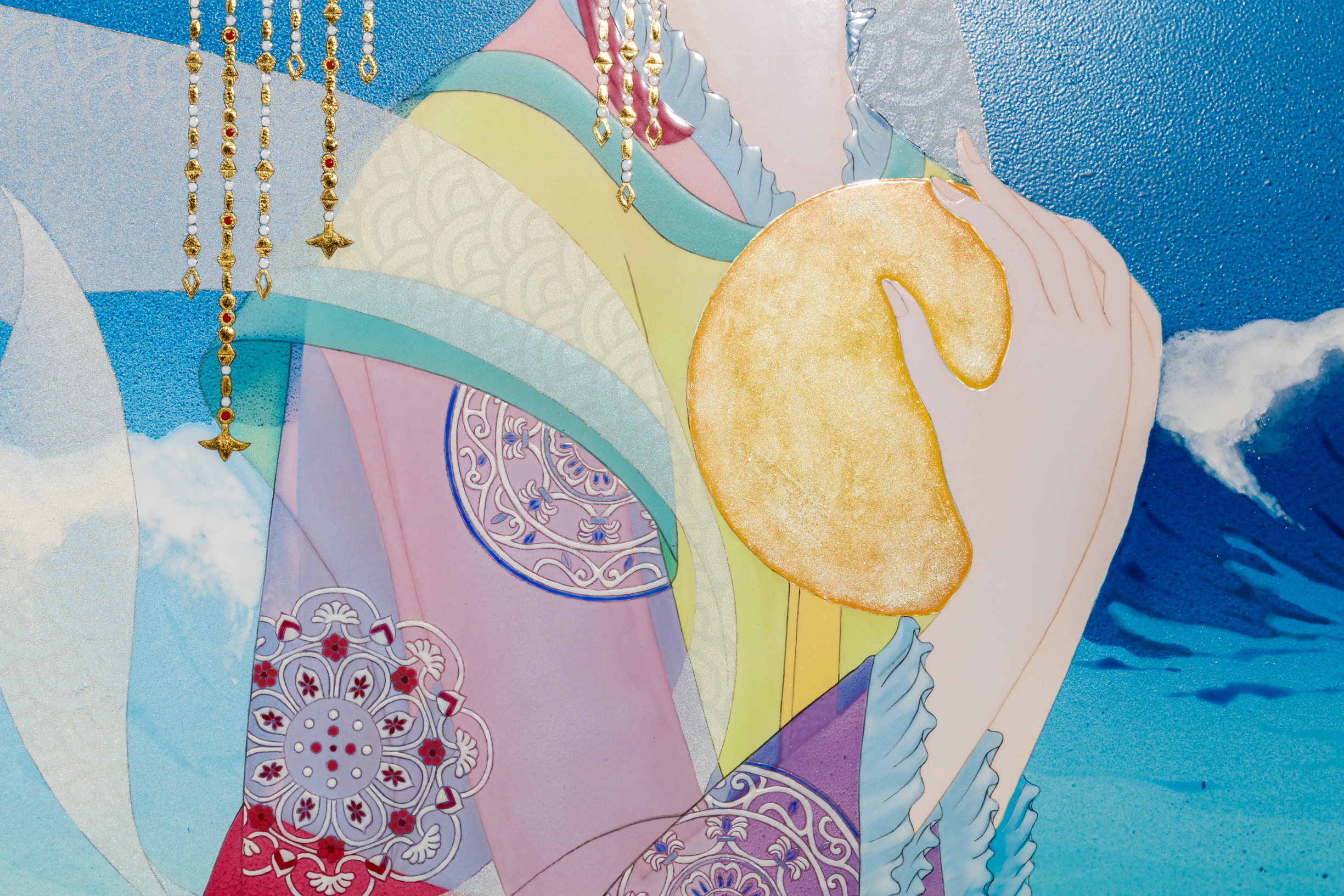
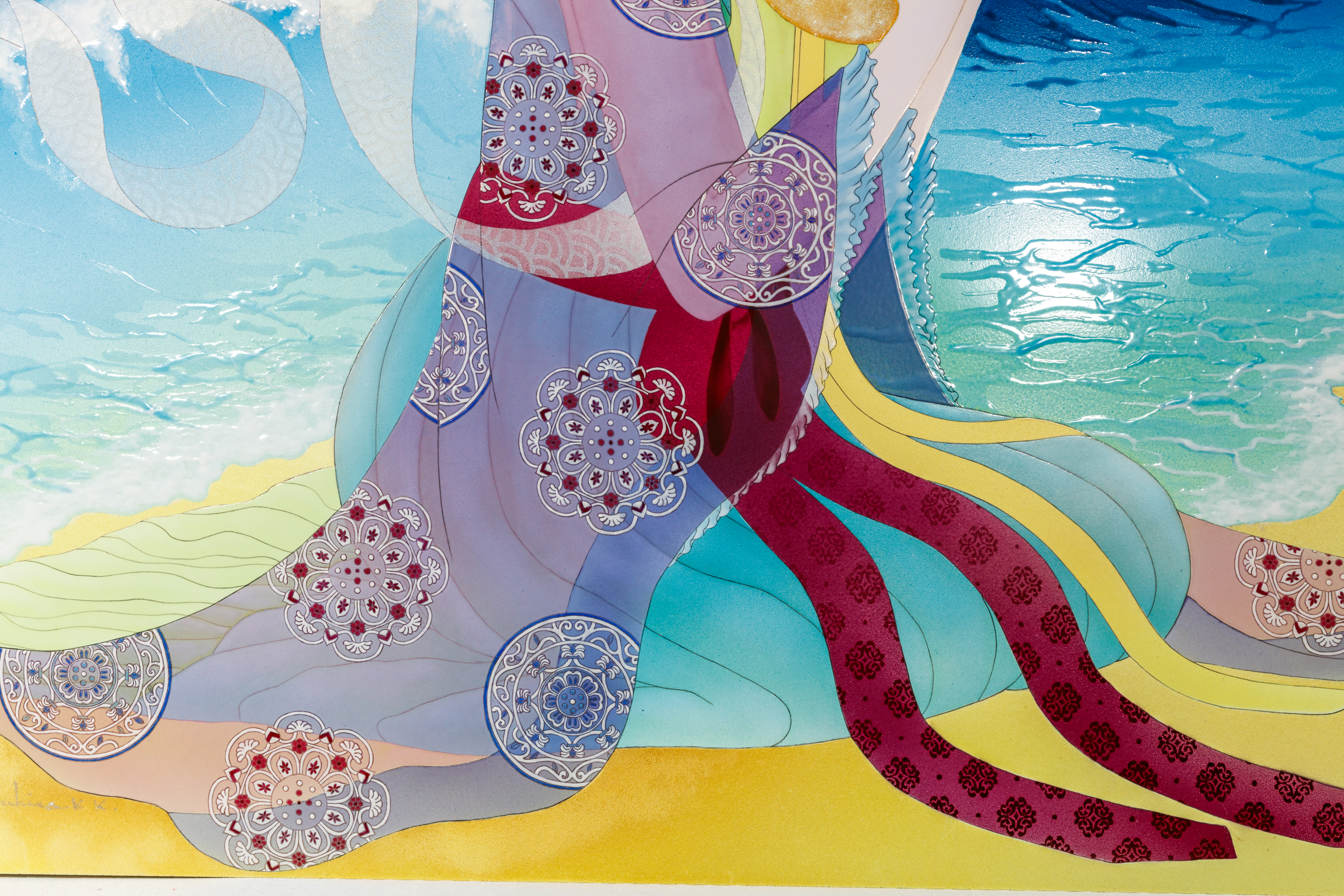
When I spoke with the indigenous elders in Sedona, I had a deeply moving experience. They cautioned against the arrogance of humans trying to control and fully understand nature, and they live with reverence for the unseen greatness and the laws of nature that can never be explained by words or logic. Touching their worldview of protecting the "realm to be revered," memories from Japanese mythology came alive within me. Toyotama-hime, who, behind her superficial beauty and gentleness, concealed the unfathomable intensity and wildness of nature, yet still sought to connect love and life to the future. I have entrusted the abyss of humanity living in this contradictory world and the reverence for nature to this goddess and depicted them in her image.
)